Blog

Stay up to date on Sunlight’s work in D.C., throughout the country and around the world, as well as the latest open government, transparency and technology news.

Congress May Fix Web Site Rules

Earlier this year, David All and I wrote a section of the Open House Project calling for the House to review and rewrite arcane franking regulations as applied to member Web sites. According to Roll Call, it looks like this is actually going to happen. If you've ever been to a congressional Web site you've probably noticed the lack of interactivity, multimedia, and linking that is common in today's Internet. That's because of unwritten, nonspecific, arbitrary rules that are unevenly applied across member Web sites. Members can't post YouTube videos, link to MySpace, ask people to Digg something on their site, or have a blogroll. All of that may be changing soon:

Regulations prohibit content that can be construed as an advertisement or as purely personal information, such as links to fundraisers or support for partisan causes. Now, the new phenomenon of social networking sites — and the increasing use of them by Members — is testing the application of such rules in a multimedia world.

House and Senate officials say several Members are not in compliance, though none apparently have been disciplined. It’s time, they say, to update the rules to match the technology.

The House Administration Committee has been drafting possible changes for months, as has the Senate Rules and Administration Committee.

Read more

Transparency, via GAO and Academia

Paul Blumenthal just came across this document from the GAO, transcribing a pithy speech by the Comptroller General of the United States, David Walker (the head of the GAO). Transparent Government and Access to Information: A Role for Supreme Audit Institutions provides a neat tour of the advantages of transparent public administration, from the viewpoint at the top of the nation's leading accountability officer.

(more after the jump.)

Read more

NY's Project Sunlight

New York Attorney General Andrew Cuomo today unveiled "Project Sunlight," a powerful and easy-to-use website giving the public unprecedented access to the workings of state government and the information it keeps. While not directly affiliated with us, imitation is the highest form of flattery. We also think that this beta website can provide a model for other states.

New York's Project Sunlight allows tracking, in as real time as the reports are available, seven different state databases -- campaign financing, lobbying, agency contracts, member items, legislation and both for-profit and not-for-profit corporations -- and the links between them.

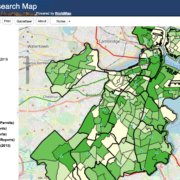
The website -- which went live today at 3 PM -- also offers a map of the state allowing users to search for member item spending by locality and includes videos to enhance the ease with which users can understand the educational materials.

Read more

Air Graves

Citizens for Responsibility and Ethics in Washington (CREW) highlights a Roll Call report about U.S. Rep. Sam Graves' use of a contributor's airplane to travel throughout his large rural district, and his failure to disclose the use of the plane in his House reports. Graves has benefited from possibly thousands of dollars worth of free flights owned by a contracting firm that is also a major financial contributor to Graves' campaigns. St. Joseph, Mo., -based Herzog Comanies Inc. is the second largest contributor to Graves over his career, having given the congressman over $75,000 since 1989. How can Graves' failure to disclose these gifts not have been a violation of House ethics rules?

Last month, Roll Call raised questions regarding other flights Herzog provided Graves on its airplanes. Prime Buzz, the political blog of The Kansas City Star, reprinted the subscription-only article. Graves' financial reports list flights on Herzog corporate jets to attend NASCAR races in Florida. Graves's records term the flights as gifts from a personal friend. House ethics rules did allow members and their staff to receive gifts from friends, but requires that member receive prior approval from the ethics committee for any gift valued over $250. But as Roll Call points out, the jets are owned by a corporation, not an individual...And corporations don't have friends.

Read more

Congress Disinterested in Whether USDA Program Works, Washington Post Reports

Department of Agriculture efforts intended to create jobs in rural areas, including the Rural Business and Industry Guaranteed Loan Program, haven't quite worked as planned:

Funds have gone to firms that have hired foreign workers instead of Americans. Millions more have gone to failing and bankrupt businesses. Most of the jobs are not new. Many are low-tech and low-wage. In addition to the loan program, the USDA has handed out almost half a billion dollars in rural development grants to businesses and nonprofits since 2001. Loan guarantees or grants have gone to a car wash in Milford, Del.; a country club in Great Falls, Mont.; a movie theater in Smithfield, N.C.; a water park in Myrtle Beach, S.C.; an alligator hunter in Dade City, Fla.; snowmobile clubs in Maine; and dozens of gas stations and convenience stores in Maryland, Ohio, Pennsylvania and Arkansas.

The article, written by Gilbert M. Gaul in today's Washington Post, provides the kind of in depth examination of government spending that should be routine but sadly, rarely happens. Perhaps his most disturbing finding about the Rural Business and Industry Guaranteed Loan Program is this: "More than three decades after the loan program was created, USDA officials still don't know whether it works." Office of Management and Budget assessed the program in 2003, at which time USDA disclosed that, "No independent performance evaluations have been conducted to assess the program's impact on improving economic opportunities in rural communities." And, Gaul reports, members of Congress have other interests: making sure the money spigot stays open.

Read more

Comments on Bundling Disclosure Now at the FEC

<p>Among the potentially meaningful and important changes to the law in the <a href="http://www.opencongress.org/bill/110-s1/show">Honest Leadership and Open Government Act</a> is a provision that requires candidates for federal office to report <a href="http://en.wikipedia.org/wiki/Campaign_finance_in_the_United_States">the bundled contributions</a> they receive from lobbyists. Bundled contributions are among the most insidious sources of campaign money because they give a single donor the opportunity to get credit for raising contributions that are often hundreds of times greater than the legal limits applied to individuals.  The massive contributions no doubt result in greater access to elected officials. At Sunlight, we believe bundled contributions from any party-CEOs, non-lobbyist lawyers and law firms-should be publicly disclosed. But, the new law limits such disclosure to registered lobbyists, which at least begins to get to the heart of the problem.<br /> <br />The key to this well-intended provision is to ensure that when it is applied, it is not so full of loopholes that any lobbyist worth her $500 an hour fee finds a way to avoid reporting the bundled contributions she forwards to candidates. The Federal Election Commission has the responsibility of crafting regulations that carry out the intent of the new law.  The FEC asked for public comment on its proposed rules, and made those <a href="http://www.fec.gov/law/law_rulemakings.shtml#bundling.">comments</a> available yesterday. The comments came from three Members of Congress, groups that champion ethics reform, and others who, for reasons of their own (or their clients) seem to want to keep bundled contributions hidden in the shadows. </p>
Read more

Sen. Ensign Still Opposes Transparency

Sen. John Ensign continues to block the campaign finance electronic filing bill that Sens. Dianne Feinstein and Russ Feingold have been attempting to pass all year. The bill, which the Sunlight Foundation has fought hard to get passed, has 41 cosponsors including 16 Republicans (including Sens. Bob Bennett, Lamar Alexander, and John Cornyn among others). Despite this not being a partisan issue, Ensign insists on blocking consideration of the bill by offering an irrelevant and controversial amendment, which initially came from the offices of Sen. Mitch McConnell, to require outisde groups filing ethics complaints to disclose their funding sources. This has been noted as unconstitutional law and is an absurd requirement to demand.

Is the Senate Ethics Committee truly overburdened with cases? Sen. Ensign says that complaints in the Senate can be written "on a beverage napkin or written in crayon." I'm not sure what number of ethics complaints are submitted by drunks and children (or some combination of the two) but it can't be that high. In fact, the only known ongoing Senate Ethics Committee investigation was started by the Senate Republicans when they filed a complaint against Sen. Larry Craig for pleading guilty to possibly, maybe, perhaps being gay. Ellen just linked to a list of potential ethical issues facing a number of Republican Senators that could be investigated. If outside groups can file these complaints so easily - in crayon and on a beverage napkin - why isn't the Ethics Committee investigating anything?

Read more

And the Biggest Winners of Earmarks Are . . . .

The top-two ranking GOP members of the Senate Appropriations Committee have secured more money in earmarks than all other individual members of Congress. The Hill, reporting on earmark data compiled by Taxpayers for Common Sense (TCS), found that Sen. Thad Cochran (R-Miss.) and Sen. Ted Stevens (R-Alaska) nabbed $744 million and $502 million in earmarks respectfully. Since losing control of Congress, the GOP share of funds set aside for special projects have been cut by almost a third, yet these two Senators kept for themselves huge shares.  As the paper quotes a Senate Republican aide, the two senators are "not only the kings of pork, they're outright hogs."

Democrats share access to earmarks more equitably among its members.

Read more