Blog

Stay up to date on Sunlight’s work in D.C., throughout the country and around the world, as well as the latest open government, transparency and technology news.

OpenGov Voices: The Open Data Ecosystem Thrives in Philadelphia

Disclaimer: The opinions expressed by the guest blogger and those providing comments are theirs alone and do not reflect the opinions of the Sunlight Foundation or any employee thereof. Sunlight Foundation is not responsible for the accuracy of any of the information within the guest blog.Pam Selle

Pam Selle is a News Apps Developer and Community Evangelist for AxisPhilly, a nonprofit investigative news organization that prioritizes work in the public interest. She is a resident of Philadelphia, speaks at national and regional technical events, and blogs at thewebivore.com. Follow her at @pamasaur.

Philadelphia is known as a leader in the open government movement – the city lays claim to the second Chief Data Officer in the country (Sunlight OpenGov Champion Mark Headd), is a two-time Code for America host city, is home to an active Code for America Brigade and has social good hackathons at least every month, sometimes every week. There’s a strong interest in creating applications to inform and empower citizens with apps such as Lobbying.ph, PhillySNAP and Baldwin using public data for their respective purposes.

In February, the city released the AVI calculator, an online app that helps residents determine real estate taxes under a new policy that went into effect. The city also made the data powering the calculator available as an API. This allowed AxisPhilly, an independent, nonprofit news organization, use the AVI calculator API and transform it from just informational to a discussion tool.

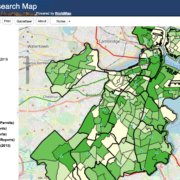
Axis PhillyThe website appsforphilly.org, which lists open source projects in Philadelphia, lists these two projects side by side. So how did a city government and a news organization end up next to each other on this list of open source projects? What’s the story behind Philadelphia making a web app and releasing the data to enable tools like AxisPhilly’s? For one, both projects are open source and allow for code-sharing. You can access the code for both the City of Philadelphia’s AVI project and AxisPhilly’s map project template on GitHub. AxisPhilly’s project also leverages the property parcels open data set.

Read more

2Day in #OpenGov 4/5/2013

NEWS ROUNDUP:

  • Outfits like Ushahidi spent years building and sharing tools to help track election issues in advance of recent presidential elections in Kenya, hoping that they could help stem the violence that came along with the country's last election in 2007. While they can't take all the credit for relatively peaceful polls this year, their efforts were part of broader initiatives that seem to have worked. (Tech President)
  • The FBI has taken advantage of rules in the PATRIOT act that allow them to send out "national security letters" that come along with gag orders, preventing their recipients from even talking about the existence of the letters. Recently, several tech companies have successfully pushed back about this closed process. First, the Electronic Frontier Foundation successfully sued, representing an unnamed telecom company, and now Google is taking on the practice. (Ars Technica)
  • The IRS mistakenly revealed the names of a number of donors to the Republican Governors Association Public Policy Committee, a "nonprofit" that is supposed to be able to hide its donor list from public view. (Public Integrity)
  • The House Judiciary Committee is sending Richard Hertling, its former chief counsel and staff director, through the revolving door. Hertling, who has also worked in the Senate and at the Justice department during the Bush administration, is joining Covington & Burling government affairs team. (The Hill)
  • While the National Rifle Association gets most of the press and popular attention another group, Gun Owners of America, is emerging as a major force in opposition to new gun control legislation that is winding its way through the Senate. (New York Times)
  • When the U.S Chamber of Commerce and Labor Unions came to agreement on visas for low-skilled workers the lane seemed open for a slam dunk for this immigration reform legislation. But, some business groups are unhappy with the deal and, led by the construction industry, appear poised to launch a lobbying press to block the deal.(POLITICO)
  • Beards are booming among groups as diverse as urban hipsters and mountain men, but facial hair has been on a long decline in America's halls of power. Now there's a PAC aiming to reverse that trend. The Bearded Entrepreneurs for the Advancement of Responsible Democracy (BEARD) PAC recently registered with the FEC. Happy Friday and enjoy the accompanying slideshow! (National Journal)
Read more

The D.C. Code is Open--Come Hack on It!

Unboxed DC CodeMost states keep their legal code in the open, but a few hold-outs have asserted a copyright over that material. Until just a few hours ago, D.C. was one of them.

Work on opening the D.C. Code has been moving fast. It was just eight days ago that Sunlight received a lovely box full of D.C. data from Carl Malamud (pictured at right). Carl paid hundreds of dollars to acquire a paper copy of the law, then digitized it, freeing an essential public resource from the weird copyright limbo that it had fallen into.

This was a great example of freeing data, but it was also a provocation: Carl was daring the D.C. Council and their vendors to raise a fuss over copyright to make a point about the public's right to access the law--not only in D.C., but everywhere. But that didn't happen. Washington Times reporter (and former Sunlight staff member!) Luke Rosiak interviewed Vladlen David Zvenyach of the D.C. government, who said the "copyright is intended to protect [the city council] against [our vendors], not protect [those vendors] against the public.” He also said he had no intention of causing problems for Carl.

This, in turn, prompted Steve Schultze, from the Center for Information Technology Policy (CITP) at Princeton, to issue a challenge:

Ok Vladlen. Why don’t you put your money where your mouth is and put a CC-0 license on your physical and electronic copies of the DC Code?

And guess what: He did! You can now download an (admittedly unofficial) CC-0 copy of the code right from the city council's website.

This has all happened pretty quickly--hopefully I haven't gotten the story wrong. But the upshot is clear: D.C. Code data is now available to the public. This is a great testament to the work done by Carl -- who has some history prying this sort of state info open -- and to everyone else who's written about this issue and why it's important (a partial list would have to include Tom MacWright, Steve, Luke, Martin Austermuhle, Cory Doctorow, Josh Tauberer, Waldo Jaquith, and many others).

Now it's time to actually put this data to use! Our friends at MapBox are hosting a hackathon on April 14 to crack open the Code and start building great stuff with it. If you're in the area, we'll hope to see you there.

UPDATE: Josh Tauberer was on the front lines of this fight, and has posted his own account of how it all went down--it's well worth a read.

CISPA is Still Terrible for Transparency

Last year we called the Cyber Intelligence Sharing and Protection Act (CISPA), H.R. 3523 in the 112th Congress, "terrible on transparency," because of a provision that would exempt a broad and poorly defined swath of information from the Freedom of Information Act.

CISPA is back in the 113th Congress and not much has changed. According to OpenTheGovernment.org, the bill still contains language that would exempt all "cybersecurity threat information" shared under the act from the FOIA. This is a dangerous and unnecessary precedent to set. As we noted last year, implementing a broad exception for poorly defined information without a public hearing "is irresponsible and should be opposed."

The Congressional debate over CISPA is currently taking place behind the closed doors of the House Select Committee on Intelligence. Chairman Mike Rogers has announced his committee's intent to mark up and vote on CISPA this month and a committee spokesperson has suggested that it will meet behind closed doors next week to consider the bill.  The committee does not appear to be planning any public hearing or vote.

Along with 40 other groups, Sunlight has signed a letter urging the House Permanent Select Committee on Intelligence to hold any markup of CISPA in the open.

The committee should consider CISPA in the light of day. CISPA has the potential to affect the lives of every American and has drawn criticism from numerous privacy groups as well as the White House. Legislation this critical, and with this much potential to hinder the public's ability to hold their government accountable, deserves to be debated in full public view, not hidden behind closed doors.

You can follow CISPA using Scout, Sunlight's legislative tracking tool.

The Landscape of Municipal Lobbying Data

handshakeWhile the word "lobbyist" might evoke images of power brokers in Washington, D.C., lobbyists are also influential at the local level of policy and there are plenty of individuals and firms working to sway local government officials to act on behalf of certain interests. Some municipalities are making an effort to bring transparency to this local-level lobbying. As we explore municipal open data policies, we wanted to look at how many municipalities already release lobbying data, in particular, and what it looks like.

BASIC ACKNOWLEDGEMENT OF ACTIVITY

The most basic kind of municipal lobbying disclosure is simply acknowledging which laws and codes govern the process. This is seen on the websites of cities like Atlanta, Georgia, which notes that local lobbyists are required to register with the State Ethics Commission under state law, though there are no local laws regulating lobbyists. Baltimore County, Maryland, notes on its website that it has a code that requires lobbyist registration and reporting. These reports are not shared online, however. Henderson, Nevada, details its lobbyist requirements on its website with links to the relevant city ordinance and documents. It, too, does not post the completed documents online.

MINIMAL PROACTIVE DISCLOSURE

Other municipalities are proactively disclosing at least some of the completed documents that lobbyists are required to file. Albuquerque, New Mexico, provides PDFs of lobbyist registration statements dating back to 2009. These scanned versions of handwritten documents are not searchable or sortable, but releasing these documents at all is one step toward disclosure about who is trying to influence local government.

Some municipalities have attempted to provide greater access to their lobbying information, with mixed results. Tamarac, Florida, has a searchable list of lobbyists and of commission visitors, but it does not appear to provide a full list for either (let alone a bulk download option), so users have to know what they're looking for in the data. Denver, Colorado, doesn't have a search portal, but it provides a downloadable list of currently registered lobbyists in the City and County of Denver. Austin, Texas, meanwhile, makes it clear to users that they can search its lobbyist database or browse complete lists.

LOOKING FORWARD

A few municipalities across the country have gone beyond most others in making lobbying information accessible. Chicago appears to release some of the most detailed and interactive lobbyist data among U.S. cities. The city's data portal contains information about registered lobbyists, compensation, gifts, expenditures, and termination. The data is searchable, sortable, and downloadable and made available in open formats. In part, this data exists (and its upkeep will be made easier) because Chicago also has an electronic filing system that lets lobbyists register online.

New York City’s transparency portal also includes a high density of lobbying information, including its lobbying ordinance, annual reports, reporting periods and more. It has a lobbyist database that is searchable and browsable. However, the data is not downloadable and the platform restricts your ability to compare data side-by-side by forcing you to select one category of information (i.e. lobbyists, lobbyist organizations, or clients) at a time. Los Angeles, San Diego, San Francisco, and San Jose have lobbying disclosure portals with comparable amounts of information and accessibility -- and problems.

***

Local government policy on lobbying and lobbying disclosure can be heavily impacted by the relationships municipalities have with their states -- relationships that we know can be quite complicated. To better understand the influence of state lobbying laws on local lobbying disclosure, there are helpful guides like the National Conference of State Legislatures' list of state definitions of "lobbying" and "lobbyist" complete with legal citations. FollowtheMoney.org has a report on state lobbying that can help illustrate how state regulations might impact any lobbying data collected at the local level.

Lobbying isn't a one-way effort, of course. Many local units of government hire lobbyists to represent their interests at the state or federal level. They might do this directly or by being part of an association that serves as a group lobbyist. The Center for Responsive Politics tracks the annual spending by municipalities on federal-level lobbying using information from the Senate Office of Public Records. Some municipalities acknowledge on their websites that they belong to organizations advocating on their behalf: Tulsa, Naperville, and Sandy City are just a few examples.

Lobbying data -- whether it's about those who lobby local government or how local governments lobby others -- is already being put to good use. Journalists and other watchdogs use this information to learn about connections between the influence lobby and the shape that government policies take, and quality disclosure of this data can make other datasets, such as zoning or procurement data, more valuable and informative by adding traceable context. Still, we found that only about 50 cities release any kind of lobbying data, with only a few disclosing data about the details of lobbying, such as reports on meetings, gifts, or termination.

The question is what guidance is needed to help municipalities release more of this information, what should be included in the broad category of “lobbying data,” and what’s the best technical way to release it? We’re exploring the best practices related to this data and would love your input.

Photo by Flickr user buddawiggi

Morozov on Sunlight

While Sunlight has generally not been a target of Evgeny Morozov's criticisms, I was amused a few days ago to discover that I'm quoted in his new book, To Save Everything Click Here (page 117). Morozov suggests that Sunlight is a "bastion of technosolutionism," quoting me from this 2010 Economist article: "There is a cultural change in what people expect from government, fuelled by the experience of shopping on the internet and having real-time access to financial information."

Technology is at the heart of Sunlight's approach to our mission, and we do see citizens' technology-fueled expectations for information access as an overwhelmingly positive force in pushing for a more transparent, accountable government. (Indeed, other versions of the quote Morozov cites can be found throughout our work. I suspect that Morozov has overlooked the valuable work of our peers as well, whose ideas and work often inspire our initiatives.)

But accusing Sunlight of being a "bastion of technosolutionism" misses the mark enormously. I was initially torn over whether to write about the skepticism, nuance, and substance that help fuel Sunlight's work, but then I came across another passage from Morozov that provides a perfect opportunity:

How do we ensure accountability? Let’s forget about databases for a moment and think about power. How do we make the government feel the heat of public attention? Perhaps by forcing it to make targeted disclosures of particularly sensitive data sets. Perhaps by strengthening the FOIA laws, or at least making sure that government agencies comply with existing provisions. Or perhaps by funding intermediaries that can build narratives around data—much of the released data is so complex that few amateurs have the processing power and expertise to read and make sense of it in their basements. This might be very useful for boosting accountability but useless for boosting innovation; likewise, you can think of many data releases that would be great for innovation and do nothing for accountability.

In this passage, Morozov outlines what he sees as a good faith approach to creating government accountability through open data. This passage reads like an intro paragraph to a Sunlight Foundation strategy document or activity report. Let's try it again with links:

How do we ensure accountability? Let’s forget about databases for a moment and think about power. How do we make the government feel the heat of public attention? Perhaps by forcing it to make targeted disclosures of particularly sensitive data sets. Perhaps by strengthening the FOIA laws, or at least making sure that government agencies comply with existing provisions. Or perhaps by funding intermediaries that can build narratives around data—much of the released data is so complex that few amateurs have the processing power and expertise to read and make sense of it in their basements. This might be very useful for boosting accountability but useless for boosting innovation; likewise, you can think of many data releases that would be great for innovation and do nothing for accountability.

I could have added links to each letter instead of each word. Sunlight's work is varied and complex, and definitely can't be adequately summarized as "solutionist" -- Sunlight lives at the intersection of journalism, advocacy, technology, and political power.

My screen shows 579 pages of blog posts on just the main Sunlight blog, covering our activities since our founding in 2006. If you read all of them, no doubt you could extract some sentiments that you could call "solutionist." You'd also find skepticism, optimism, public dialog, exuberance, curiosity, and all the various signs of people in an organization engaged publicly in the complicated work of government transparency.

We think about risks like "solutionism" (I referred recently to the "triumphalist" view of legislative versioning), just as we think about the risk of relying too strongly on an inside (or outside) advocacy strategy, or the risks of advocating for transparency in the wrong places. (You'd be unlikely to conclude that Sunlight endorses a "monitorial democracy," though, if you were familiar with the depth of our writing and thinking on the topic.)

Sunlight's conception of open data is not agnostic to political power, refuses to be reduced to splashy data portals, and serves specific needs to help create valuable journalism and public dialog and a more substantive politics.

2Day in #OpenGov 4/4/2013

NEWS ROUNDUP:

  • Los Angeles' long awaited 311 app arrived on April 1. The free mobile app allows Los Angelenos to submit service requests, locate city services, and pay bills. (Gov Tech)
  • Air shows, which provide summer time entertainment around the country, were hit hard by the sequester. Now, a trade group representing the shows is fighting back with some lobbyist firepower. The International Council of Air Shows, inc. recently hired Van Scoyoc Associates to work on its behalf, the first time the organization has ever contracted lobbyists. (Public Integrity)
  • Iceland's innovative crowd-sourced constitution may be in its final days. Last fall, the document was sent to Iceland's parliament for review, but that parliament was dissolved last week in preparation for new elections on April 27. The constitution is scheduled for a referendum after April's elections, but it faces a relatively high bar for passage. (Tech President)
  • President Obama took a stroll down Billionaires Row last night to raise money for the DCCC. He swung by the homes of billionaires Tom Steyer and Ann and Gordon Getty for high dollar fundraisers expected to pull in several million dollars. (POLITICO)
  • Mary Schapiro and Lanny Bruer, respectively the outgoing heads of the SEC and DOJ's criminal division, failed to win major civil or criminal actions against any Wall Street executives involved in the financial collapse. Both are now leaving the administration to take jobs at firms that rely on Wall Street for much of their income. (National Journal)
Read more

The STOCK Act and Security through Obscurity

Congress has been delaying implementation of the STOCK Act, largely out of fear over what could happen if disclosures go online. A new report from the National Academy of Public Administration says those fears are well-founded. But its reasoning is flawed, and its recommendations -- which amount to security through obscurity -- are badly wrong-headed. If there are problems with the disclosures mandated by STOCK, let's fix them. Ignoring them and hoping that obscurity will prevent bad things from happening is not only short-sighted, it's dangerous.

Read more

Is the U.S. Backtracking on Political Finance Transparency as Others Move Forward?

I recently returned from Croatia, where I was invited to speak about what works and what doesn’t in terms disclosure of money in politics in the United States. I was certain that the portion of my talk advocating disclosure of all election-related spending would lead to questions about whether, in some cases, anonymity is necessary to protect those who want to make financial contributions for election related activities. After all, Croatia is in a part of the world where, until recently, exercising one’s right to free speech could have serious consequences. I had come armed with answers to respond to questions about whether some level of anonymity associated with political contributions is ever appropriate.

My answers remained in my briefcase. I did not need to share that even the extremely conservative Justice Scalia understands that, "harsh criticism, short of unlawful action, is a price our people have traditionally been willing to pay for self-governance. Requiring people to stand up in public for their political acts fosters civic courage, without which democracy is doomed." For this audience, it was a given that the sources of money behind election-related activities must be public. Needless to say, the acceptance of disclosure by those attending a conference on election innovations does not make transparency a region-wide or even a countrywide trend. But that no one even raised the issue of anonymity as a necessary condition for financial political participation was a stark and telling contrast to the debate over dark money in this country.

Since the Citizens United decision, there has been a vocal camp decrying disclosure, despite the Supreme Court’s own recognition that “disclosure permits citizens and shareholders to react to the speech of corporate entities in a proper way [and] transparency enables the electorate to make informed decisions and give proper weight to different speakers and messages.” But compared with the recent and real histories of new and emerging democracies, where free speech has been met with government intimidation, harassment and punishment, the parade of horribles spelled out by Mitch McConnell and others seems almost laughable.

In this country, there are protections for those who can establish a real and legitimate threat as a result of their positions. The Socialist Workers Party, for example, has for years asked for and received an exemption from having to report its contributors based on demonstrable harassment. Such exemptions, given on a case-by-case basis, are narrowly tailored to address actual harm and are a far cry from McConnell’s proposition, which would grant blanket anonymity to corporations and wealthy individuals to protect them from harsh criticism and potential boycotts of their products. (Never mind that boycotts and criticism are also protected by the first amendment.) Pre-emptive anonymity as a method to stave off any possible bad reactions is not only unnecessary, but it places all political speech on a slippery slope toward secrecy. Why stop with dark money? If we are willing to provide contributors to outside groups with blanket protection for phantom threats, shouldn’t all contributors to political candidates and parties be similarly hidden from public view?

For those of us who work on political finance transparency issues in the U.S., it is disheartening to have protect against a system of clandestine influence buying while, at least to us, it appears that parts of world where secrecy had been the norm are now moving towards greater transparency. On the other hand, perhaps it is a matter of perception. Do newer democracies look at the U.S. as at least having a system of disclosure, however flawed? In some countries, is the issue of political finance transparency so new that any debate around the issue of anonymity is yet to come? For those of you exploring political finance transparency around the globe, we’d love to start a dialogue. Please share your experiences, thoughts and perceptions in the comment space below.

2Day in #OpenGov 4/3/2013

NEWS ROUNDUP:

  • Lobbying law loopholes may have allowed many individuals who were registered to lobby in 2011 to deregister in subsequent years while still working for the same companies, and possibly continuing to lobby. There are plenty of reasons why a lobbyist would want to deregister ranging from fear of stigma to the desire to land an administration job. (Roll Call)
  • Mary Schapiro, the former head of the SEC, has found her way through the revolving door and into a job with Promontory Financial Group. The private consulting firm has a long list of former regulators on its roster. (POGO)
  • Five New York state politicians were arrested yesterday in a bizarre case of attempted bribery. State Senator Malcolm Smith, a Democrat, was arrested for allegedly conspiring to bribe Republican county chairmen to support a plan that would have Smith run for Mayor on the Republican ticket. Unfortunately for Smith and his alleged conspirators, the wealthy real estate developer bankrolling the plan was really an undercover FBI agent. (NPR, National Journal)
  • According to a new government report on Open Government Partnership compliance the U.S. acted on 24 of it's 26 initial commitments. One of the discarded commitments was ExpertNet, a government wide online community that would have allowed volunteer experts to give consultations. (Fierce Government)
  • President Obama has taken a different, and in some ways much more limited approach, to dealing with the press than previous presidents. While he holds more formal press conferences and one-on-one interviews, he rarely faces the press in uncontrollable situations. (Huffington Post)
  • Opinion: The Justice Department should do a better job of making its Office of Legal Counsel opinions publicly available. They currently withhold significant numbers of the documents and are fighting the Electronic Frontier Foundation over a request by the EFF for access to an OLC opinion on the FBI's authority to surveil American's without a warrant. (Washington Post)
Read more